
Rolling Your Way to Freedom with the Snowball Method
The Simple Strategy That Helps Thousands Pay Off Debt Faster
Pay off debt snowball style means clearing your smallest debts first — one by one — while making minimum payments on everything else. It’s one of the most popular debt-reduction strategies around, and for good reason.
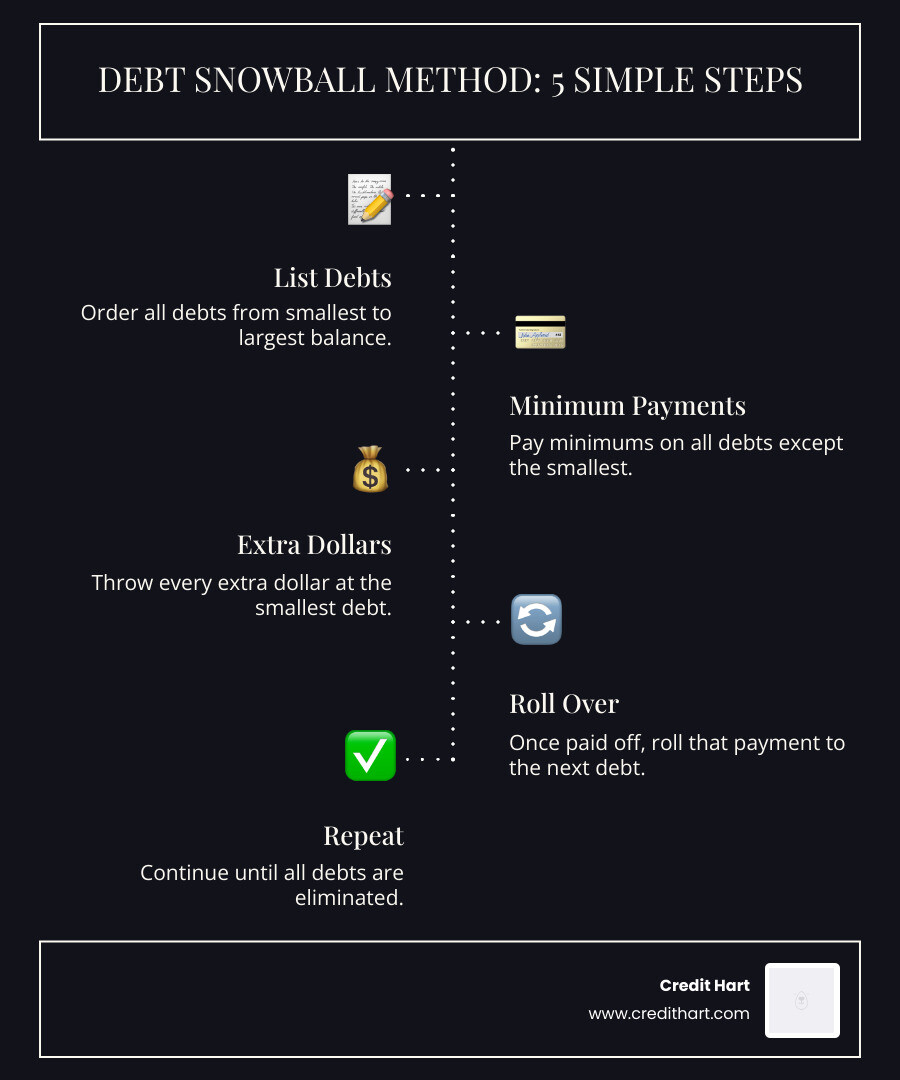
Here’s the core method at a glance:
- List all your debts from smallest balance to largest
- Make minimum payments on every debt except the smallest
- Put every extra dollar you have toward that smallest debt
- Once it’s gone, roll that payment into the next smallest debt
- Repeat until you’re completely debt-free
It sounds almost too simple. But research backs it up.
A 2012 study from Northwestern’s Kellogg School of Management found that people who tackle their smallest balances first are more likely to eliminate their overall debt than those who chase high interest rates. A 2016 Harvard Business Review study reinforced this — focusing on the smallest balance has the most powerful effect on your sense of progress, which keeps you motivated to continue.
As personal finance expert Dave Ramsey puts it, managing money is “20 percent head knowledge and 80 percent behavior.” The snowball method works with your psychology, not against it.
Whether you’re juggling credit card balances, a car loan, student debt, or medical bills — this guide will show you exactly how to put the snowball method to work.
What is the Debt Snowball Method and How Does It Work?
At its heart, the debt snowball is a momentum-based strategy. Imagine a tiny snowball at the top of a snow-covered mountain. If you give it a little push, it starts to roll. As it rolls, it picks up more snow, gets heavier, and moves faster. By the time it reaches the bottom, it’s an unstoppable force.
When we pay off debt snowball style, we are doing the exact same thing with our money. Instead of looking at interest rates—which can feel abstract and discouraging—we look at the total balance of each debt.
The Rollover Mechanism
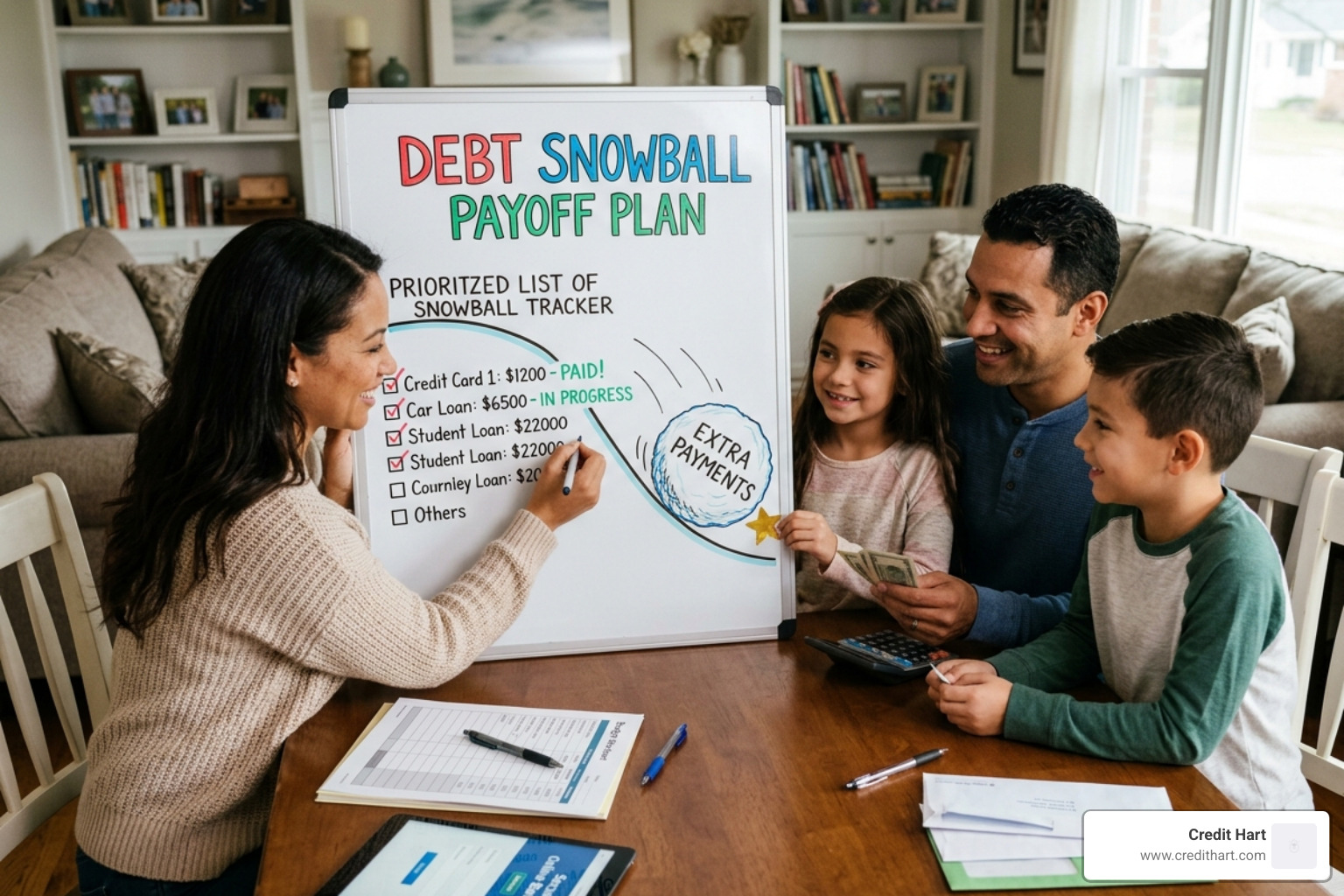
The “magic” happens through the rollover method. Every time you eliminate a debt, the money you were previously paying toward it doesn’t just disappear back into your lifestyle. Instead, you “roll” that entire amount over to the next debt on your list.
For example, if you were paying $50 a month toward a small medical bill and you finally pay it off, you now have an extra $50 to add to the minimum payment of your next-smallest debt. Your total monthly debt payment stays the same, but the “power” directed at the current target debt grows larger with every win.
What Debts Count?
This method is primarily designed for nonmortgage debt. This includes:
- Revolving Credit: Credit cards and retail store cards.
- Installment Loans: Car loans, personal loans, and student loans.
- Other Obligations: Medical bills, payday loans, and even money owed to friends or family.
By focusing on principal reduction for the smallest balances first, you clear the “clutter” of your financial life. Instead of having ten monthly bills to track, you soon have eight, then five, then none.
How to Pay Off Debt Snowball Style: A Step-by-Step Guide
Ready to start rolling? We recommend getting organized before you spend a single extra dollar. Here is our step-by-step breakdown to ensure your snowball doesn’t melt halfway down the hill.

Step 1: List Your Debts
Gather your statements and list every single debt you owe, except for your mortgage. Order them from the smallest balance to the largest balance. Ignore the interest rates for now. If you have two debts with similar balances, you can list the one with the higher interest rate first, but balance size is your primary guide.
Step 2: Commit to Minimum Payments
You must stay current on all your obligations to protect your credit score. Ensure you are paying at least the minimum on every debt on your list except for the smallest one.
Step 3: Identify Extra Funds
Look at your budget. How much “extra” can you squeeze out each month? Maybe it’s $50 from skipping takeout, or $200 from a side gig. This is your “snowball starter.”
Step 4: Attack the Smallest Balance
Apply your extra funds plus the minimum payment to the smallest debt. Keep doing this until the balance hits zero.
Step 5: The Rollover
This is the most critical step. Once that first debt is gone, take the entire amount you were paying (the minimum plus the extra cash) and add it to the minimum payment of the second-smallest debt.
Step 6: Repeat
Continue this process. As you move down the list, the amount of money you have available to “attack” the next debt grows larger and larger.
Tips to Pay Off Debt Snowball Balances Faster
If you want to reach the finish line by April 2026 or sooner, you need to increase your “speed.” Here are a few ways to add more “snow” to your roll:
- Side Hustles: In today’s economy, there are endless ways to earn extra income, from freelancing to rideshare driving. Every cent from a side hustle should go straight into your snowball.
- Cutting Expenses: Audit your subscriptions. If you haven’t watched that streaming service in a month, cancel it. That $15 is a “quick win” for your debt plan.
- Selling Items: Look in your garage or attic. Selling an old bike or unused electronics can provide a massive one-time injection of cash to finish off a specific debt.
- Budget Margin: Use a budgeting tool to find the “leaks” in your spending. Creating margin is the fastest way to accelerate your progress.
Why Experts Suggest You Pay Off Debt Snowball First
While math-heavy strategies exist, many financial experts and researchers advocate for the snowball because it addresses the human element. The “quick wins” you get from crossing off a $300 credit card balance in the first month provide the psychological fuel needed to tackle a $10,000 student loan later.
Scientific research on consumer debt elimination shows that the sense of progress is the greatest predictor of whether someone will actually reach the end of their plan. Without those early victories, many people lose hope and stop their debt-free journey altogether.
The Psychology of Success: Why Small Wins Matter
Why does the snowball method work so well even when it isn’t always the “cheapest” way to pay (in terms of interest)? The answer lies in behavioral finance.
80 Percent Behavior, 20 Percent Head Knowledge
Most people don’t have debt because they lack a calculator; they have debt because of habits and life circumstances. Therefore, the solution must be behavioral. When you pay off debt snowball style, you receive immediate positive feedback.
The Power of Progress
A study published in Harvard Business Review found that the “most powerful effect on people’s sense of progress” comes from the number of accounts they close, not the dollar amount of interest saved. This is often referred to as “nudge theory”—small, positive reinforcements that steer you toward a better long-term decision.
Debt Account Aversion
Humans naturally dislike having multiple “open loops.” Researchers call this “debt account aversion.” We are cognitively wired to want to reduce the number of debts we owe. The snowball method satisfies this biological urge by knocking out accounts quickly, which reduces stress and increases focus.
Debt Snowball vs. Debt Avalanche: Which Strategy Wins?
You may have heard of the “Debt Avalanche” method. While the snowball focuses on balances, the avalanche focuses on interest rates.
| Feature | Debt Snowball | Debt Avalanche |
|---|---|---|
| Priority | Smallest balance first | Highest interest rate first |
| Primary Benefit | Psychological motivation and “quick wins” | Mathematical efficiency (saves more on interest) |
| Best For | People who need motivation to stay on track | Analytical individuals with high discipline |
| Speed of Initial Win | Very Fast | Can be slow (if the high-interest debt is large) |
| Total Interest Paid | Slightly more | Slightly less |
Choosing to Pay Off Debt Snowball Instead of Avalanche
The avalanche method is mathematically superior—there is no debating that. If you pay off the highest interest rates first, you will pay less total interest over the life of your debt.
However, the avalanche has a “motivation gap.” If your highest interest debt is a $20,000 credit card, you might pay at it for two years without ever seeing a “zero” balance. Many people give up during this period. We choose the snowball for our clients because emotional satisfaction and habit formation are the keys to long-term adherence. It is better to pay a little more in interest and actually finish the journey than to have a “perfect” mathematical plan that you abandon after six months.
Practical Implementation and When to Pause Your Plan
Before you start throwing every extra penny at your credit cards, you need a safety net.
The Starter Emergency Fund
We recommend saving a starter emergency fund—typically $1,000—before you begin your debt snowball. Why? Because life happens. If your car tires blow out or your water heater breaks, and you don’t have cash, you’ll just end up using a credit card again, which breaks your momentum.
When to Pause Your Snowball
While we want you to be intense, there are times when you should temporarily pause your extra payments (but keep making minimums!):
- Health Crisis: If you are facing a major medical emergency.
- Job Loss: If you lose your income, hoard your cash to cover necessities.
- Major Life Changes: Having a baby or going through a divorce.
- IRS Bills: Tax debt often carries penalties that require immediate attention.
Lender Communication
When making extra payments, especially on car loans or personal loans, contact your lender. Ensure they are applying the extra funds to the principal reduction and not just moving your next due date forward. This ensures you are actually shortening the life of the loan.
Frequently Asked Questions about the Snowball Method
What types of debt are most commonly targeted?
The snowball is most effective for consumer debts like credit cards, medical bills, personal loans, and auto loans. Most people do not include their primary mortgage in the snowball, as the balance is so much larger than other debts that it would stall the “momentum” effect.
When should someone consider pausing their plan?
As mentioned above, pause for “life-altering” events. Once the crisis has passed or the baby is home and healthy, you can restart the snowball with the cash you’ve saved up.
How can individuals stay motivated during the process?
- Visualize Progress: Use a “debt thermometer” or a chart on your fridge that you can color in.
- Celebrate Milestones: When a debt is gone, do a “happy dance” or have a small, low-cost celebration.
- Find Accountability: Share your goals with a friend or spouse.
- Remember Your “Why”: Why do you want to be debt-free? Is it for your kids? For retirement? For the ability to travel? Keep that reason front and center.
Conclusion
At Credit Hart, we believe that managing your money shouldn’t be a source of constant anxiety. Our mission is to provide you with the tools and advice you need for stress-free rewards optimization and financial planning. By choosing to pay off debt snowball style, you are choosing a path that respects your humanity and your need for progress.
Once you’ve cleared your debts, you’ll have the cash flow and the freedom to maximize your financial rewards and minimize your stress. If you’re ready to take the next step in your financial journey, explore our resources on how to manage your debt effectively and start rolling your way to freedom today.
